
Advice and inspiration
How often should I have my rug professionally cleaned?

There is no single fixed interval that suits every hand-knotted rug. The often-quoted range of 3–5 years can be reasonable for a good wool rug in an ordinary living room, but it may be too soon for a quiet bedroom and too long for an entrance runner or a home with a dog. The real condition of the rug matters more than the calendar.
Professional cleaning makes sense when regular gentle vacuuming is no longer enough: the pile looks grey, the rug smells, fine dust is held deep in the structure, the edges are soiled, a spill has left a mark, or there are signs of moisture, insects or a pet accident. With a valuable, old, silk or uncertainly dyed rug, specialist assessment should come before automatic washing.
Why one universal date does not work
Cleaning frequency depends on material, pile height, knot density, dyes, room traffic, street dust, pets, children, smoking, cooking fumes, humidity and vacuuming habits. A rug in a bedroom walked on barefoot ages differently from a hallway runner carrying grit from shoes. A fine silk rug also cannot be judged in the same way as a sturdy wool rug in a living room.
For ordinary fitted carpet, professional deep cleaning is often recommended about every 12–18 months. Hand-knotted loose rugs need a more careful approach: they are not glued to the floor, can be lifted, dusted or washed off-site, and may have more sensitive dyes, fringe or repairs. The interval should therefore be judged individually.
Indicative intervals by use
| Situation | Indicative specialist cleaning interval | Note |
|---|---|---|
| Bedroom or quiet study | Often 5–7 years, sometimes longer | If vacuumed regularly with no smell or deep dust |
| Ordinary living room | About 3–5 years | Depends on traffic, dust, underlay and ventilation |
| Children, pets or frequent guests | About 1–3 years depending on condition | Deal with stains and odours earlier, not only by calendar |
| Hallway or entrance area | Often 1–2 years | Sand and fine dust abrade the pile like grit |
| Old, silk or collectible rug | Only after specialist assessment | Stabilisation, repair or very gentle cleaning may be better than standard washing |
What home care can and cannot do
Home care should reduce the need for unnecessary professional cleaning. The basics are regular gentle vacuuming without an aggressive beater brush, vacuuming beneath the rug, checking the underlay, blotting spills quickly and protecting the rug from direct sun and moisture. This removes mainly dry dust and grit that would otherwise wear the fibres.
A home vacuum cannot solve everything. Oily soil, fine dust held near the foundation, odours, older stains, pet accidents, water marks or residues from unsuitable cleaners need professional judgement. A hand-knotted rug should not be soaked, steamed or treated with general household chemicals at home.
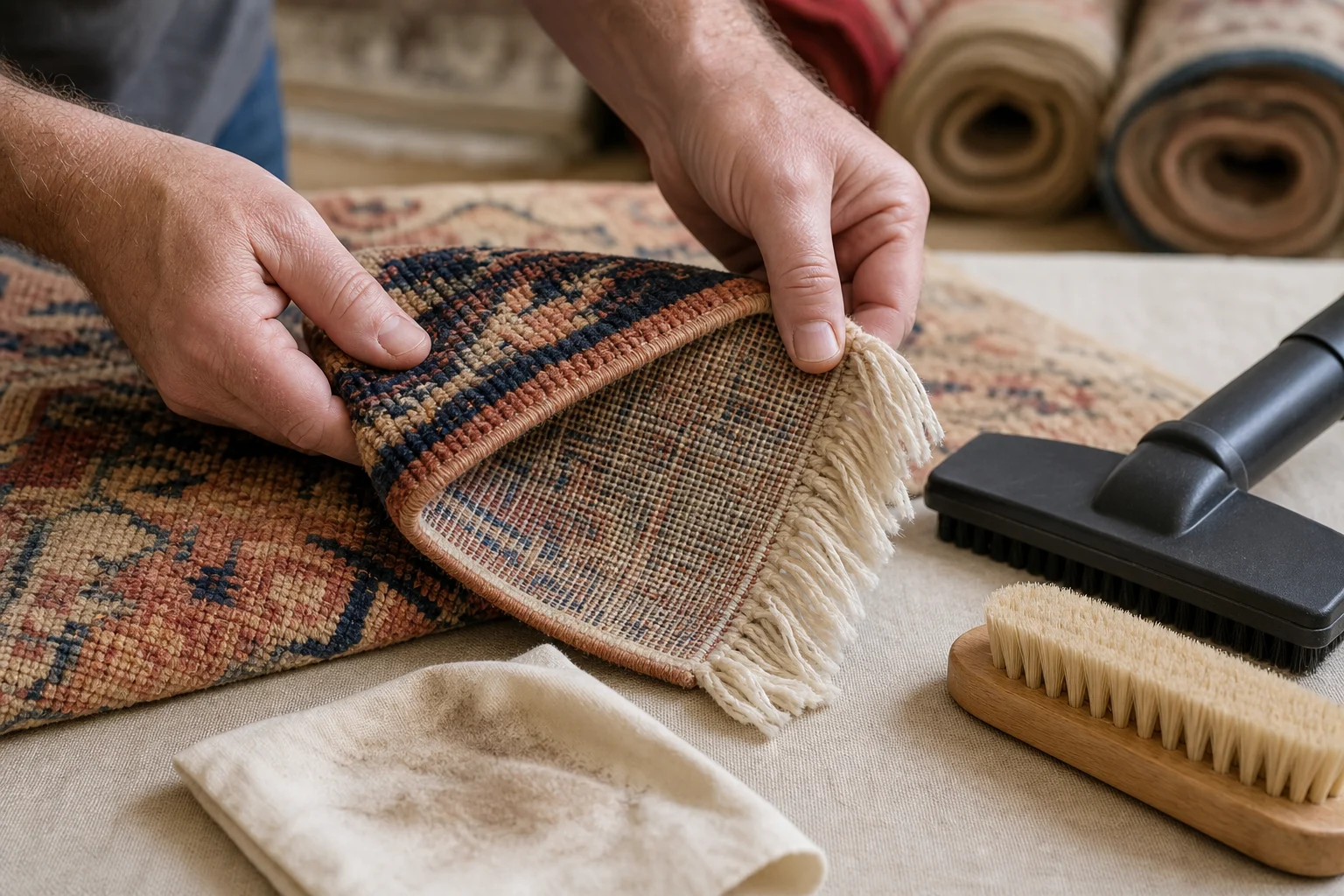
The reverse, sides and fringe often show whether a rug has only surface dust or deeper soiling and a risk of structural damage.
Signs that your rug needs a specialist
- the colours and pile look grey even after gentle vacuuming,
- fine dust releases when the rug is lifted or moved,
- the rug smells musty, smoky, damp or of pets,
- the reverse shows water marks, stains, stiff areas or suspicious repairs,
- fringe is soiled, brittle or unravelling,
- the pile is flattened in traffic lanes and vacuuming no longer improves it,
- there are stains from food, drink, plants, urine or cleaning products.
When not to wait for the regular interval
After a major spill, water leak, pet accident or suspected mould, do not wait several years. The longer moisture, salt, urine, wine, coffee or grease stays in the rug, the greater the risk of dye migration, odour, fibre damage and difficult repair. At home, blot liquid without rubbing and without experimenting with chemicals.
Also do not wait if you see insects, tiny holes, webbing, brittle areas or loose threads. The main issue may not be washing but condition assessment and repair. Cleaning should help the structure, not hide a problem.
What good professional cleaning should look like
Serious rug care begins with inspection, not immediate wetting. A specialist should check material, reverse, fringe, sides, repairs, colour stability, odour and type of soiling. With hand-knotted rugs, thorough dry soil removal before wet cleaning is often important, because sand and fine particles can continue to abrade the fibres when wet.
The method depends on the rug. A sturdy wool rug, an older Persian piece, silk and a rug with sensitive colours all require different decisions. Proper cleaning must consider pH, temperature, water amount, drying speed and fringe protection. It also matters that the rug dries quickly and evenly after cleaning.
Questions to ask the cleaner
- Do you have experience with hand-knotted wool, Persian or silk rugs?
- Will you inspect the reverse, sides, fringe, repairs and colour stability before cleaning?
- Do you remove dry soil from deep in the rug before wet cleaning?
- Which method do you recommend for this specific rug, and why?
- How will the rug be dried and how long will that take?
- What cannot be promised with old stains, odour or previous damage?
- Will I receive advice for future home care?
Be careful with aggressive home cleaning
A steam cleaner, strong brush, universal foam, bleach, vinegar experiments or large amounts of water can damage a hand-knotted rug. Risks include colour bleeding, rippling, musty odour, weakened foundation, stiff pile and damaged fringe. With a valuable rug, a cheap home experiment can easily cost more than an early professional consultation.
This does not mean every small mark requires full washing. First blot a fresh spill with a clean white absorbent cloth, without rubbing. If a mark remains or you do not know what was spilled, photograph the face and reverse and ask before applying a product.
A good frequency combines observation and prevention
The best plan is simple: vacuum regularly, occasionally check the reverse and underlay, deal with accidents immediately and have the rug assessed from time to time. If the rug looks good, has no odour and does not release deep dust, it does not need washing just because a certain number of months has passed. If its condition changes, do not wait for the calendar.
At the Carpeteria showroom in Prague 5, we can show you how to recognise ordinary soil, wear, sensitive colour and fringe condition. If you are considering cleaning, bring photos of the whole rug, stains, reverse, sides and fringe — often they already show whether home care is enough or whether specialist treatment is due.